
Iran refuses to reopen strait of Hormuz amid ongoing US naval blockade
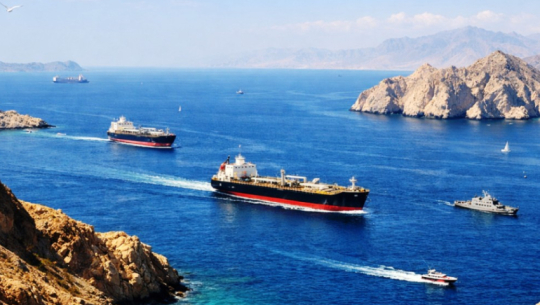
Iran has stated that it will not reopen the Strait of Hormuz, one of the world’s most sensitive oil transit routes, as long as the US naval blockade continues. Tehran has tightened its control over the strategic waterway and seized two foreign vessels, accusing them of violating the ceasefire despite its extension.
As regional tensions continue to rise, US President Donald Trump announced on Tuesday that the ceasefire would be extended for some time, expressing hope that Pakistan-mediated peace talks would progress. Iran welcomed Pakistan’s initiative but did not provide a response to the US announcement.
During initial talks held in Islamabad, Iranian Parliament Speaker Mohammad Bagher Ghalibaf, who led the Iranian delegation, stated that the ceasefire would hold no meaning while the naval blockade remains in place. He emphasized that reopening the Strait of Hormuz is not possible under conditions where the ceasefire is being clearly violated.
Oil markets have remained volatile since Israel and the United States launched attacks on Iran on February 28. Concerns over renewed conflict have driven prices higher, although US markets have shown some stability. President Trump said he is allowing time for Iran’s leadership to present a proposal, a move viewed by some as a diplomatic effort to prevent further escalation.
US Vice President JD Vance’s planned visit to Islamabad has been postponed, as Iran has not yet confirmed its formal participation in the talks. However, Trump indicated that discussions could resume within days. He also claimed that Iran had halted the execution of eight women, though Iran’s judiciary dismissed the claim as “fake news.”
Iran’s Islamic Revolutionary Guard Corps reported the seizure of two vessels passing through the Strait of Hormuz—the Panamanian-flagged MSC Francesca and the Liberian-flagged Epaminondas. Panama described the incident as a serious threat to maritime security, while UK-based maritime monitoring agencies have confirmed increased military activity in the area.
In a separate incident, a container ship near Oman came under gunfire, although no casualties were reported. Meanwhile, US forces continue efforts to intercept vessels heading to Iranian ports, a strategy seen as increasing economic pressure on Iran without escalating into full-scale war.
The Pentagon has announced the immediate resignation of US Navy Secretary John Phelan, though no reason has been provided. Reports suggest a possible high-level reshuffle under Defense Secretary Pete Hegseth.
Iran has now introduced a requirement for ships to obtain permission before passing through the Strait of Hormuz. Having earlier indicated it would allow free passage during a ceasefire, Iran has tightened its stance following the US blockade. Both sides continue to accuse each other of violating the ceasefire.
Tensions between Lebanon and Israel have also remained high amid the broader regional situation. Despite the ceasefire, Lebanese media reported that five more people were killed in Israeli attacks. Journalist Amal Khalil was killed, while another journalist, Zeinab Faraj, was injured in a border incident.
French President Emmanuel Macron confirmed that a second French soldier wounded in an attack on UN peacekeepers has died. Hezbollah has denied responsibility for the incident.
Israel and Lebanon are expected to seek a one-month extension of the ceasefire during a second round of talks in Washington. Lebanon is preparing to push for a complete halt to Israeli attacks and full implementation of the ceasefire agreement.

Dineshkhabar Desk