Nepal Army mobilizes nationwide preparedness plan for monsoon-related disasters
Kathmandu: The Nepali Army has prepared and implemented a monsoon preparedness and response plan this year, drawing on experience and lessons learned from rescue and relief operations conducted in previous years. The campaign has placed special priority on collaboration and coordination with federal, provincial, and local government bodies, other security agencies, non-governmental organizations, and local communities.
According to the Army, the required number of troops have been kept on standby in battalions and regiments across districts to ensure immediate mobilization during disasters. Specially equipped search and rescue teams, along with necessary rescue equipment, have been deployed across all provincial areas to enable swift and effective response to floods, landslides, and other emergencies.
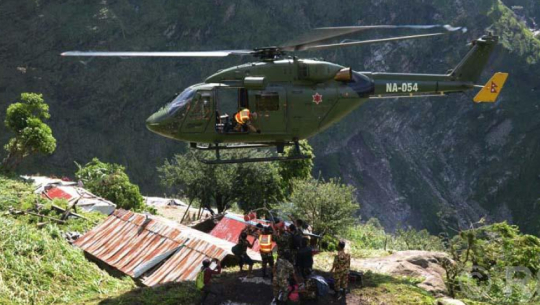
The Army has also kept helicopters and other aerial vehicles on standby to deliver rescue and relief materials to remote areas during disasters. Apart from Kathmandu, one helicopter each has been stationed in Surkhet and Itahari, according to the Army Public Relations and Information Directorate.
Arrangements have been made to keep additional aerial vehicles in Kathmandu ready for deployment across all seven provinces with the onset of the monsoon. The Army plans to pre-deploy two aerial vehicles at suitable locations based on weather forecasts. Bailey bridges have been positioned at various locations to restore traffic in case highways are obstructed due to floods and landslides. One set each has been placed in Gajuri in Dhading, Bharatpur in Chitwan, and Jitpur in Bara.
In addition, three fast mechanical bridges that can be easily transported and operated immediately have been stationed at the Gauchar Barracks. A rapid response team has also been kept on standby at Gauchar Barracks, Kathmandu, for specialized rescue operations, which can be mobilized immediately via aerial vehicles.
The Nepal Army has ensured the availability of necessary manpower, equipment, and medicines so that teams, including doctors from military hospitals across the country, can be mobilized to provide immediate health services to those injured or affected by disasters. Medicines, food supplies, and other relief materials have also been pre-positioned at various locations.
Vehicles, including heavy equipment and operators, have been kept ready for immediate deployment to assist in clearing landslides, reopening roads, and repairing damaged infrastructure.
The Army stated that disaster management requires coordinated efforts and cannot be handled by a single agency alone. Based on lessons from past monsoon disasters, preparations have been strengthened through the involvement of stakeholders from the central to the local level, including community participation.
Under the Army’s leadership, a central-level integrated exercise titled ‘Exercise Hand in Hand’ was conducted from April 21 to 23 at a military base, with participation from various ministries, government agencies, and national and international non-governmental organizations. The exercise aimed to review disaster response mechanisms, enhance response capacity, and strengthen coordination among stakeholders. Similar exercises are planned at provincial and district levels.
Collective disaster response training has also been conducted with the participation of local communities, with the aim of further improving coordination between citizens and security agencies during emergencies.
According to Army Spokesperson and Assistant Lieutenant Colonel Rajaram Basnet, the Nepal Army remains committed to minimizing loss of life and property through effective implementation of the preparedness plan, joint exercises, and coordinated efforts with all stakeholders.
Amid increasing challenges posed by monsoon-related disasters, the Army’s extensive preparations are expected to strengthen the disaster management system and enhance public confidence and sense of security.