
Farmers Face Fertilizer Shortage During Wheat Sowing Season, Raising Fears of Reduced Production
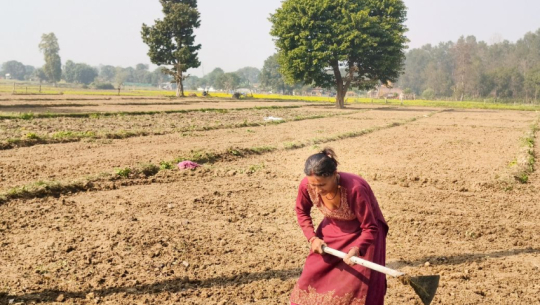
Farmers in Kanchanpur are struggling to obtain chemical fertilizers during the wheat sowing season, raising concerns that the shortage could affect agricultural production and their income.
Thaggu Rana of Pipariya, Kanchanpur, owns five bighas of farmland with her family. However, due to the shortage of fertilizers, she has been unable to cultivate the entire land as Dhangadhi:planned. She says she has been forced to grow sugarcane on half of the land and lentils and mustard on the remaining portion. Wheat cultivation has also been limited to only a small area.
Phulsohattar Rana, also from Kanchanpur, has been facing fertilizer shortages every year. She says farmers are compelled to stand in long queues at cooperatives throughout the day to obtain fertilizers. After failing to get enough fertilizer for paddy cultivation last year, she has received only enough fertilizer for half a kattha of land for this year's wheat cultivation.
She cultivates one bigha of land, including her own and leased farmland, and fears that the lack of adequate fertilizer will affect crop production.
While farmers are facing fertilizer shortages during the peak agricultural season, local governments have also been unable to take effective measures. Hemraj Ojha, Mayor of Krishnapur Municipality, said that the responsibility for supplying chemical fertilizers lies with the federal government.
According to him, farmers are facing difficulties because the government has not provided adequate quotas to companies responsible for fertilizer supply. He added that although local governments have no direct role in fertilizer procurement and distribution, farmers frequently approach them with complaints.
The municipality is also conducting soil tests and preparing to distribute fertilizers to farmers based on the test results and their agricultural requirements, Ojha said.
In Sudurpashchim Province, Salt Trading Corporation Limited and Agriculture Inputs Company Limited are responsible for supplying chemical fertilizers. However, both companies claim that they have been unable to meet farmers' demand because the allocated quotas are insufficient this year.
Limited supplies have increased the number of farmers queuing at cooperatives, while many have failed to obtain the required amount of fertilizer.
With the wheat sowing season nearing its end and the shortage remaining unresolved, the risk of reduced agricultural production and income is increasing. Despite the recurring fertilizer shortage during crucial farming seasons, a long-term solution to the problem has yet to be found.

Dineshkhabar Desk